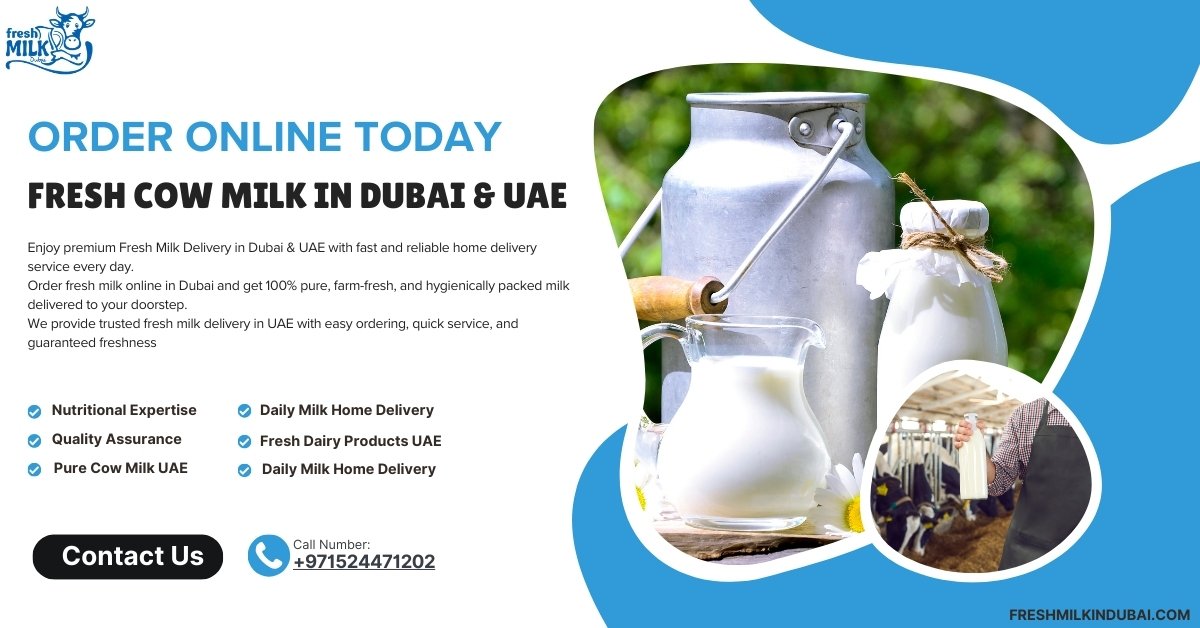
The first time I tried genuinely fresh milk in Dubai, I remember being a little confused. It didn’t taste like the milk I grew up drinking from a carton. It was thicker. Slightly sweeter. And it went off faster if I forgot to put it back in the fridge. That confusion is actually the whole point of this article because most people searching for fresh milk in Dubai don’t really know what they’re supposed to be getting, and a lot of brands aren’t exactly clear about it either.
So let’s slow down and actually talk about it properly.
“Fresh” Is a Word That Gets Thrown Around a Lot
Walk into any Carrefour or Spinneys in Dubai and you’ll see the word “fresh” printed on cartons that have been sitting on a shelf, unrefrigerated, for two or three months. That’s UHT milk — heated to a very high temperature so it doesn’t need refrigeration until it’s opened. Nothing wrong with it exactly, it’s just not what most people mean when they say fresh milk in Dubai.
Real fresh milk is milk that was in an animal a day or two ago. It’s been kept cold the entire time. It hasn’t been blasted with heat to make it shelf-stable. And because of that, it behaves differently — shorter shelf life, richer taste, and a texture that’s noticeably creamier once you get used to it.
If you’ve only ever had carton milk, the switch can genuinely feel like trying a different product altogether.
Where Does It Actually Come From?
This is the part most websites gloss over. In Dubai and the wider UAE, farm-fresh milk generally comes from local dairy farms — some in Al Ain, some further out toward the northern emirates. Cows are milked, the milk is chilled almost immediately, and from there it either goes into raw form or gets a light pasteurization before being bottled.
The honest truth is that not every supplier tells you where their milk actually comes from. If a company can’t answer “which farm” when you ask them directly, that’s worth noticing. We’ve written a longer breakdown on how to vet a supplier properly in our piece on choosing a fresh milk brand in Dubai, if you want to go deeper on that.
Raw or Pasteurized — People Get Weirdly Passionate About This
There’s a small but growing group of people in Dubai who swear by raw milk — unheated, straight from the farm, kept cold. They’ll tell you it digests easier, tastes better, and keeps its natural enzymes intact. There’s also a very reasonable camp that prefers a light pasteurization, just for that extra bit of safety margin, especially for kids or elderly parents.
Neither side is wrong, honestly. It comes down to trust in your source and your own comfort level. We go into this in more detail in our raw vs pasteurized milk comparison, but the short version is: if you trust the farm, raw milk is genuinely a different experience. If you’d rather not think about it too much, pasteurized is the safer default.
A2 Milk Keeps Coming Up — Here’s the Actual Reason
If you’ve spent any time browsing dairy delivery sites in Dubai, you’ve probably noticed “A2 milk” popping up everywhere lately. It’s not a marketing gimmick, even though it can feel like one. Regular cow milk has a mix of two proteins — A1 and A2. A2 milk comes from cows that only produce the A2 type, which some people digest more comfortably. It won’t work miracles, and it’s still got lactose in it, but a fair number of people who feel bloated after regular milk report feeling fine on A2. Worth trying once and seeing how your body reacts, rather than taking anyone’s word for it — including ours.
Cow, Buffalo, Camel, Goat — Do You Actually Need to Pick One?
Not really, and that surprises people. A lot of Dubai households actually rotate:
Cow milk stays the everyday go-to — for chai, cereal, whatever. Buffalo milk comes out when someone’s making paneer or a rich dessert, because it’s noticeably thicker and holds up better in cooking. Camel milk gets bought more for the health angle — it’s lower in fat, has a slightly salty edge, and a lot of people take it specifically for the immune-support reputation it’s built in this region. Goat milk tends to show up in households where someone’s stomach doesn’t handle cow milk well.
If you’re trying to figure out which one actually fits your family, our comparison on buffalo milk versus cow milk breaks down the practical differences rather than just listing nutrition facts nobody remembers.
What Delivery Actually Looks Like Day to Day
This part matters more than people think before they sign up. A good fresh milk in Dubai delivery service isn’t just “someone drops a bottle at your door.” It usually means the milk was collected that morning or the evening before, kept cold in transit, and arrives at your door before you’re even properly awake — which, if you’re in a place like Business Bay or Dubai Marina, tends to mean early morning slots before the traffic starts.
Subscriptions are honestly the easiest way to do this. You pick daily, alternate days, or weekly, and you stop thinking about it. If you’ve been putting off setting one up, we walked through exactly how it works in our subscription guide.
A Few Things Nobody Tells You
Fresh milk separates a little in the fridge sometimes — a thin layer of cream rises to the top. That’s not spoilage, that’s just what unhomogenized milk does. Give the bottle a gentle shake before pouring.
It also genuinely does go off faster than carton milk. Two to five days is the realistic window, not two to five weeks. If you’re used to stockpiling milk for the month, this requires a small mindset shift — order what you’ll actually use in a few days, not a big batch “just in case.”
And the taste difference is real, but it’s not always instant. Some people love it from the first sip. Others need two or three deliveries before their taste buds stop expecting the carton-milk flavor they’re used to.
So, Is It Worth Switching?
If you care about where your food comes from, and you don’t mind ordering more frequently in exchange for something that tastes noticeably better and hasn’t sat in a warehouse for months — yes, it’s worth trying. If convenience and a six-week shelf life matter more to you than taste and freshness, UHT milk will keep doing its job fine.
There’s no wrong answer here. But if you’ve never actually tried proper fresh milk in Dubai, it’s worth doing at least once, if only to know what you’ve been missing.
Try It Yourself
We deliver farm-sourced cow, buffalo, camel, and goat milk fresh across Dubai, Sharjah, and Ajman — collected, chilled, and delivered the same day. You can browse our full range of dairy products or check if we deliver to your area on our service areas page.
Want to try your first bottle? Place an order here or WhatsApp us directly at +971524471202.
Frequently Asked Questions
Is fresh milk in Dubai actually safe to drink?
Yes, as long as it comes from a properly managed farm and is kept refrigerated from collection to delivery. Ask any supplier directly which farm they source from — a trustworthy one will always tell you.
How is fresh milk different from the milk in supermarket cartons?
Supermarket cartons are usually UHT (ultra-high-temperature) milk, heated to survive months on an unrefrigerated shelf. Fresh milk is minimally processed, kept cold throughout, and typically delivered within a day or two of being collected.
How long does fresh milk actually last in the fridge?
Realistically, two to five days. It’s not meant to be stockpiled the way carton milk is — order what you’ll use in a few days.
Is raw milk safer than pasteurized milk, or the other way around?
Neither is automatically “safer” — it depends entirely on how well the source farm handles hygiene. Pasteurized milk has a small extra safety margin from the heat treatment; raw milk keeps more of its natural enzymes intact.
Do I need to pick just one type of milk — cow, buffalo, camel, or goat?
No. Most households in Dubai rotate between them depending on the use — cow milk for daily drinking, buffalo milk for cooking and paneer, camel milk for its health reputation, and goat milk for sensitive stomachs.