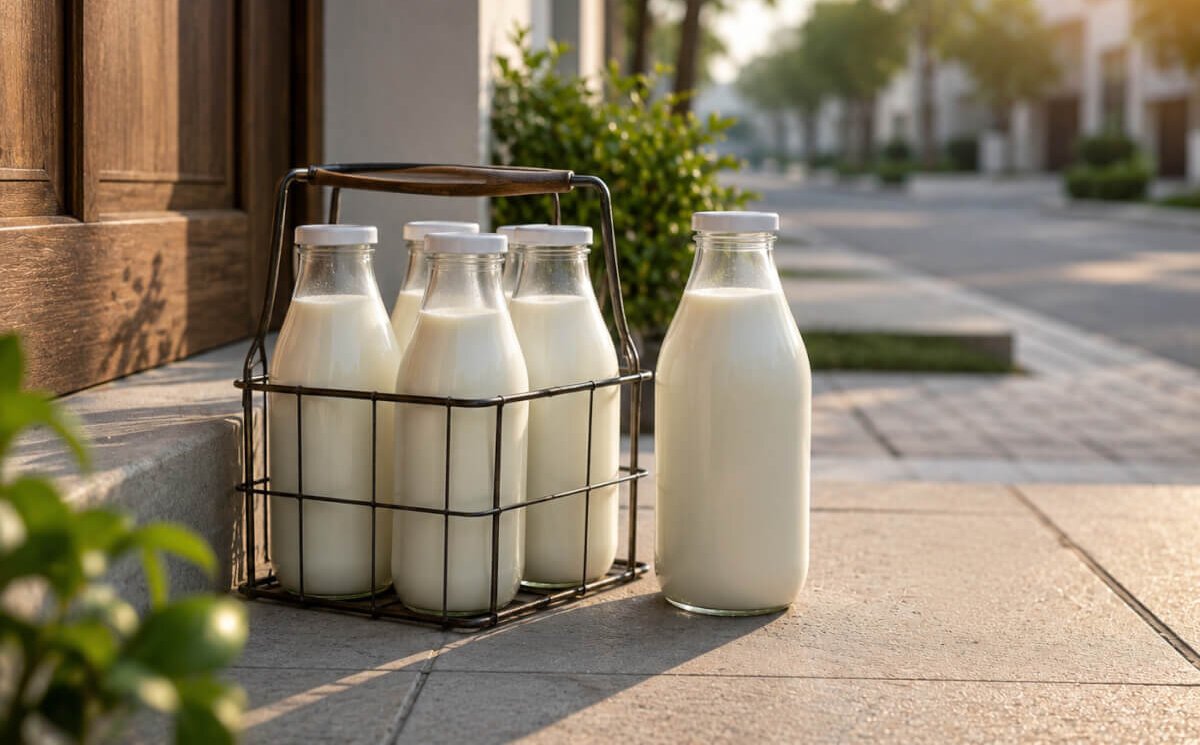
It is one of the first things new customers ask us: is the milk you deliver raw or pasteurised? Sometimes the question comes the other way round — someone who has been drinking pasteurised milk from the supermarket for years wants to know what raw milk actually is, and whether it is the same thing in a different bottle. It is a fair question, because the two words sound similar and the two bottles can look identical in the fridge. They are not the same thing, though, and once you know the difference in plain English, the choice becomes easy.
This guide explains raw milk and pasteurised milk the way we explain them to our own customers — no jargon, no scare stories, no sales pitch. What each one is, how they taste, how long they keep, which one suits a daily pot of chai or a pot of kheer, and how fresh milk in Dubai reaches your door.
What raw milk actually is
Raw milk is milk as it comes from the cow — or the buffalo, the goat or the camel. It is collected, chilled and bottled, and that is all. It is not heated, nothing is taken out and nothing is added. When we deliver raw milk in Dubai, the bottle that arrives at your door in the morning is the same milk it was the evening before, kept cold the whole way.
Because raw milk is not heated, it keeps the natural character of milk: the full taste, the creamy mouthfeel, the slight sweetness that people remember from childhood milk. That is why so many families prefer it for drinking as it is, warmed up in a cup, or poured over porridge and into milkshakes. It tastes like milk that has not been interfered with, because it has not.
There is one habit that belongs with raw milk, and most families in Dubai follow it without thinking: raw milk is usually brought to the boil before drinking. Heat it in a saucepan until it bubbles, let it cool a little, and it is ready. That has been the way families here have handled fresh milk for generations. Once it is boiled, keep it in the fridge and finish it within a day or two.
What pasteurised milk actually is
Pasteurised milk is milk that has been heated briefly — just long enough to kill the germs that can grow in raw milk — and then cooled down fast. That is the whole process: heat it, cool it, bottle it. A French scientist named Louis Pasteur worked it out in the 1800s, and it is still the standard way of making milk safe to drink straight from the bottle in almost every country.
The milk you buy in a supermarket carton in Dubai is almost always pasteurised. It is designed to be poured cold and drunk as it is, with no boiling needed. Because it has been heated, it keeps longer in the fridge than raw milk — a few days, sometimes a week or more — and because it is made in big batches in a factory, it tastes the same from one carton to the next.
The trade-off is the taste. Heating milk changes it slightly. Most people describe pasteurised milk as milder and flatter than raw milk — a steady, even taste that is perfectly pleasant, but without the fullness that raw milk has. It is not a flaw; it is simply what happens when you heat milk. The difference is small, but if you grew up drinking fresh milk, you notice it.
Raw vs pasteurised: the differences at a glance
- What it is: raw milk is unheated; pasteurised milk has been heated briefly and cooled.
- How you drink it: raw milk is usually boiled first in Dubai homes; pasteurised milk is drunk cold, straight from the carton.
- Taste: raw milk is fuller and slightly sweeter; pasteurised milk is milder and more even.
- How long it keeps: raw milk is used within a day or two; pasteurised milk keeps several days in the fridge.
- Where it comes from: raw milk arrives from the farm daily; pasteurised milk usually comes from a factory line.
The taste and storage differences families notice
The first thing families notice is the taste. Raw milk tastes like milk: a little sweet, a little creamy, and noticeably fuller than the milk from a carton. Pasteurised milk tastes steady and even — the same in every glass. Neither is wrong; they are simply different, and most families have a preference within a week of trying both.
The second thing they notice is how long the milk lasts. Raw milk is a daily milk: it arrives cold, goes straight into the fridge, and is finished within a day or two. Pasteurised milk is a weekly milk: it sits in the fridge for days and still pours the same on Thursday as it did on Monday. That is the real convenience of pasteurised milk — you can buy a week’s worth in one trip.
In Dubai’s heat, storage matters more than it does in cooler places. A bottle of raw milk left on a kitchen counter in August will not stay fresh for long, so the rule is simple: into the fridge the moment it arrives, cap on, middle shelf, and use it before the next bottle comes. Pasteurised milk is more forgiving — it still belongs in the fridge, but a few minutes on the counter while breakfast is made will not hurt it. If you open a bottle of any milk and it smells sharp or sour, do not use it. Trust your nose.
Which one suits daily chai and cooking?
In a Dubai home, milk is not just a drink; it is an ingredient. The chai pot goes on in the morning and again in the evening, and the milk that goes into it decides a lot about the taste. Buffalo milk is the classic chai milk in this part of the world — its richness gives chai a fullness that lighter milks do not — and raw buffalo milk, boiled and then simmered with tea leaves, is what many families grew up with. Raw cow milk also makes a lovely chai: light, clean-tasting, and kind to a morning stomach.
Pasteurised milk makes fine chai too, and plenty of families use it every day. The difference is mostly in the richness: the chai is still good, it is simply a little lighter. If you drink three cups of chai a day and your idea of a good cup is a thick, slow one, you will taste the difference and probably prefer raw milk. If your chai is quick and milky and you are in a rush, the convenience of pasteurised milk wins.
For cooking, the same thinking applies. Kheer, custard, porridge and milk-based desserts all benefit from the fullness of raw milk, and that is why many grandmothers insist on it for festival cooking. Pasteurised milk works for everyday cooking without a problem, and it is what most people reach for when a recipe calls for a splash of milk. Cost matters here too: raw cow milk from a daily delivery is AED 30 per 1.5 litre, the same as A2 milk, while buffalo milk is AED 35 — so for most families the choice is about taste and habit, not price.
How Fresh Milk In Dubai delivers
The milk we deliver is farm-fresh raw milk. Every morning, chilled bottles leave for homes across Dubai, Sharjah and Ajman, and they arrive cold. That is the whole point of a daily delivery: the milk in your glass was collected the day before, not weeks ago. You order on WhatsApp — one message to +971 52 447 1202 with the milk you want and your address — and the bottle is at the door in the morning.
Because it is a daily delivery, the routine adapts to your life. Going away for a few days? A message on WhatsApp pauses it. Want an extra bottle on the weekend, or to switch from cow milk to buffalo milk for a week? Another message. If you have paid in advance and you pause, the days you have already paid for are carried forward as credit. To cancel or change a plan, we ask for at least 24 hours’ notice — by 6pm the day before your next delivery — and there is no cancellation fee, as our refund and cancellation policy sets out.
One thing to know before you order: we do not sell pasteurised milk. If you want milk you can drink cold straight from the bottle with no boiling, pasteurised milk from the supermarket is the right choice for you. If you want farm-fresh raw milk, delivered cold every morning, that is what we do — and we do it every day.
Prices at a glance (per 1.5 litre)
Fresh cow milk: AED 30. A2 milk: AED 30. Buffalo milk: AED 35. Goat milk: AED 45. Camel milk: AED 70. Those are the prices per 1.5 litre bottle for our farm-fresh raw milk, delivered to your door.
If you are choosing mainly for your family, we also wrote a shorter comparison on which one usually suits families better: Raw Milk vs Pasteurized Milk Dubai – Which is Better for Your Family?
Frequently asked questions
Is raw milk safe to drink?
Raw milk is milk in its natural, unheated state. Most families in Dubai bring it to the boil before drinking, which has been the household routine here for generations, and then keep it in the fridge and use it within a day or two. If you have health questions about raw milk, ask your doctor — that is a better answer than any blog can give.
What is the difference between raw milk and pasteurised milk?
Raw milk is milk as it comes from the animal — collected, chilled and bottled, with no heating. Pasteurised milk is heated briefly to kill germs and then cooled. Raw milk tastes fuller and is used within a day or two; pasteurised milk tastes milder and keeps longer in the fridge.
Can I drink raw milk without boiling it?
In Dubai, most families boil raw milk before drinking it. It is a simple step: bring it to the boil in a saucepan, let it cool, then keep it in the fridge. After boiling, drink it the same day or the next.
Which milk is better for chai, raw or pasteurised?
For chai, most families prefer raw milk — especially buffalo milk — because it is richer and gives chai a fuller taste. Pasteurised milk makes good chai too, and it is the easier choice if you want milk you can pour cold with nothing to prepare.
How long does raw milk last in the fridge?
Raw milk is a daily milk: keep it cold in the fridge and finish it within a day or two of delivery. Pasteurised milk keeps several days. With either milk, if it smells sharp or sour, do not use it.
How do I order raw milk in Dubai?
Message us on WhatsApp at +971 52 447 1202 with your milk choice and your address, and we will deliver a fresh bottle of raw milk to your door in the morning. Confirm the delivery time and order details on WhatsApp before you order.